CPHI Milan 2026: Investment Is Only Half the Story
20 Oct, 2026





Something has shifted on the conference floor. The investors who once sat quietly at the bac...


Something has shifted on the conference floor. The investors who once sat quietly at the back of the room are now at the table, and in many cases, they are running the meeting.
For those of us who work in executive search and life sciences workforce planning, this change is not subtle. It is structural, rewriting the rules for how life science companies attract, hire, and retain talent.
“There is hiring movement right now, and it’s intentional. It’s closely tied to specific milestones, and the roles are geared towards people who have a direct impact on execution and revenue.”
At Barrington James, we have watched this shift unfold in real time across conferences, boardrooms, and hiring conversations throughout 2025 and into 2026. What follows is a look at what we are seeing, why it matters to your hiring strategy, and what it signals for the life sciences workforce over the next 12 to 24 months. This shift is fundamentally changing workforce strategy across the life sciences sector.
For years, the relationship between investors and the organisations they backed followed a fairly familiar pattern. Capital came in, targets were set, and the operational team got on with building the business. Hiring decisions, headcount planning, and organisational design were largely left to leadership. That model is now largely obsolete.
In 2026, investors are actively dictating organisational structure and hiring priorities. They are approving headcount plans, scrutinising individual role justifications, and in some cases, influencing which executives get hired and which do not. The pressure on companies to demonstrate a credible, capital-efficient path to profitability means that every hire is now evaluated through an investor lens before it is ever signed off internally.
We are hearing this consistently from clients across the sector. The question is no longer simply “do we need this person?” It is “can we justify this hire to our investors, and does it map to a clear milestone?” That shift in framing has significant consequences for workforce planning teams, hiring managers, and the candidates themselves.
One of the clearest workforce planning trends emerging across life sciences is the growing divide between roles tied directly to execution and those considered longer-term or exploratory investments. Investors are simultaneously accelerating hiring in functions linked to milestone delivery while freezing or reducing headcount in areas without a clear short-term commercial impact.
Roles that directly influence speed to market are being prioritised with urgency. Clinical Operations, Regulatory Affairs, and Market Access continue to see sustained hiring demand because investors can directly connect these functions to delivery milestones such as IND submissions, Phase II readouts, and commercial launches. If a hire can accelerate timelines or reduce execution risk, it is far more likely to secure approval.
At the same time, Early Discovery headcount and broad exploratory research functions are facing much greater scrutiny. Companies that expanded research capabilities aggressively between 2020 and 2022 are now being asked to rationalise team structures and demonstrate clearer links between hiring investment and measurable business outcomes.
If there is one theme dominating investor conversations at conferences right now, it is tech-enabled biology. Investors across the sector are increasingly unwilling to back companies that are not leveraging artificial intelligence to compress drug discovery timelines. This is not a future consideration or a nice-to-have. It is a current funding filter, reshaping recruitment trends at a rapid pace.
Companies that cannot demonstrate meaningful AI integration into their discovery and development processes are finding it harder to compete for capital. And as capital becomes more conditional, so does the talent conversation. The executives and scientists who can sit at the intersection of advanced biology and data science are not just in demand; they are becoming prerequisites for funding conversations.
This is creating a talent bottleneck unlike anything we have seen in life sciences executive search. The pool of people who genuinely operate across machine learning, computational biology, and clinical development is small, highly sought after, and increasingly expensive. Companies that have not started building relationships with this talent profile are already behind.
The phrase we are hearing most consistently from investors and board-level clients in 2026 is “leaner for longer.” The era of growth-at-all-costs headcount expansion is firmly over. What investors want now is a workforce that is specialised, cross-functional, and built for execution, not exploration.
This has direct consequences for how organisations approach workforce planning.
The tolerance for generalist roles, build-out hires, and long onboarding curves has shrunk considerably. Every hire needs to deliver a clear, demonstrable return, ideally against a specific milestone that investors can track. We are also seeing a meaningful rise in flexible staffing models as a result.
Fractional executives, embedded contractors, and interim leaders are being used not as a fallback, but as a deliberate workforce strategy. Companies are finding that a highly experienced interim commercial lead or regulatory director can deliver immediate impact during a critical phase without the long-term fixed costs of a permanent hire. In many cases, investors are actively encouraging this approach.
Leadership scrutiny has increased significantly across life sciences. C-suite and VP-level hires that may have been easily approved 18 months ago are now facing far greater investor scrutiny, with organisations expected to justify the commercial and operational value each leader brings.
The most sought-after executives are those who combine scientific understanding with commercial awareness, can operate effectively in capital-constrained environments, and can deliver quickly without compromising quality or compliance.
Candidates from heavily resourced, large-pharma environments are also finding the transition into investor-scrutinised biotech environments more challenging. In today’s market, leaders who can build lean teams, adapt quickly, and deliver against milestones with limited infrastructure are becoming increasingly valuable in executive search.
For life sciences companies navigating this environment, the implications for hiring strategy are practical and immediate. Workforce planning can no longer operate independently of investor priorities. Talent acquisition teams need to understand which milestones are driving the business, which hires are directly tied to those milestones, and how to frame every role in those terms.
Equally, the speed at which the market is moving means that delayed hiring decisions carry real risk. The specialised profiles that investors are most keen to see in place, AI-fluent scientists, cross-functional clinical leads, milestone-oriented regulatory strategists, are in short supply. Companies that wait until the pressure is acute will find themselves competing for a very small pool of available talent at exactly the wrong moment.
Building relationships with this talent now, before the immediate need arises, is one of the most effective things a life sciences organisation can do. It is also something that a growing number of our clients are already doing.
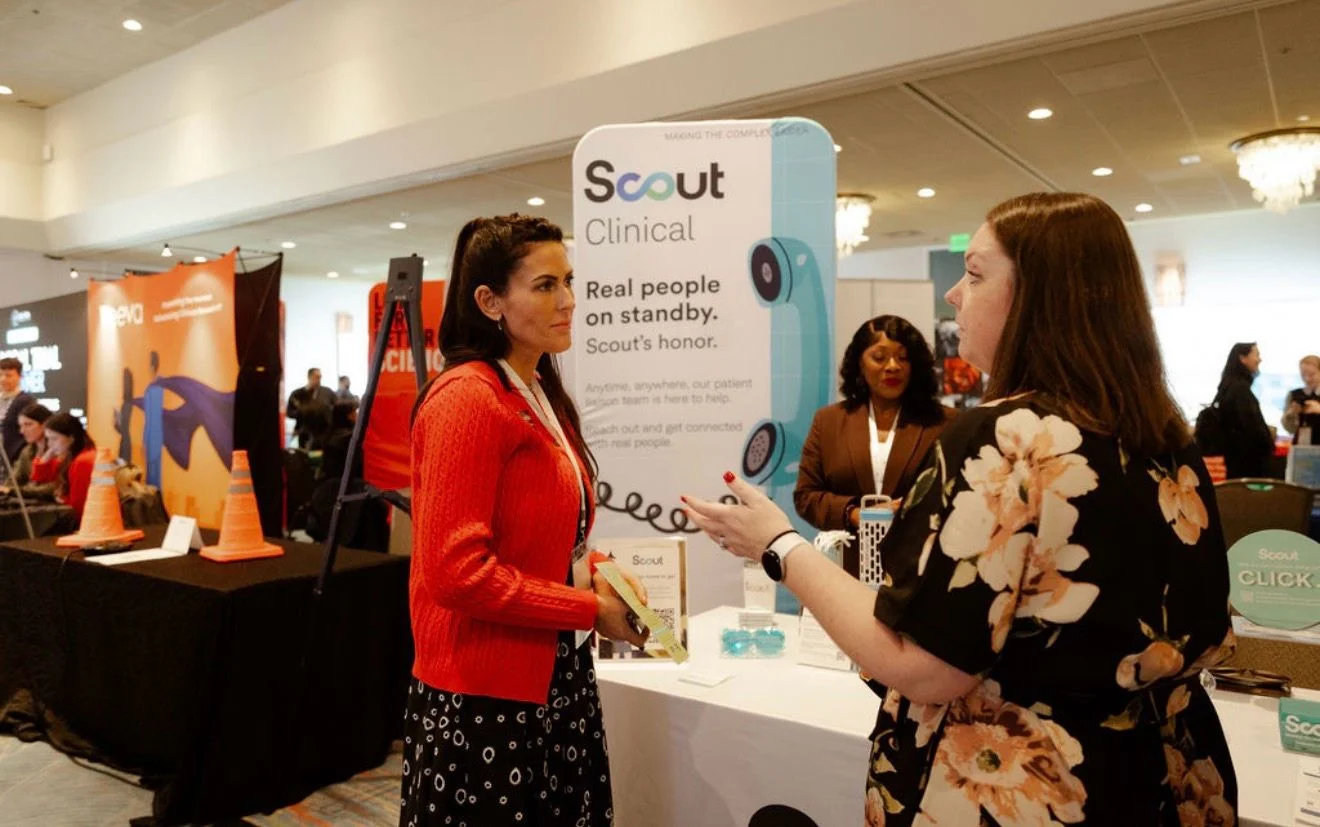
“The most valuable part of conferences rarely happens on stage. It happens in the informal conversations…”
In life sciences, some of the most important workforce planning and hiring strategy signals emerge long before they become public. Conversations around paused trials restarting, budgets reopening, leadership changes, and investor priorities often happen informally at conferences months before organisations officially announce their next move.
That is why conference intelligence has become an increasingly valuable part of workforce strategy in 2026. For organisations trying to stay ahead of recruitment trends, being physically present in the market matters. It provides visibility into where capital is moving, which therapeutic areas are regaining momentum, and where hiring demand is likely to increase next.
At Barrington James, conferences are not viewed purely as networking or brand-building opportunities. They are a core source of market intelligence that informs our executive search strategy, workforce planning conversations, and talent advisory work across life sciences. Through direct conversations with sponsors, CROs, investors, site networks, and leadership teams, we gain early insight into the hiring pressures, operational challenges, and workforce shifts shaping the industry before those changes fully materialise in the broader market.
Lisamarie has spent the past year at the centre of the conversations shaping the future of life sciences hiring, speaking directly with investors, sponsors, CROs, site networks, and industry leaders across the conference circuit. We’ve brought those insights together into an exclusive Barrington James report exploring the workforce strategy shifts defining 2026.
The full report covers direct investor conversations from the conference floor, the roles facing the greatest scrutiny, emerging recruitment trends, and how leading life sciences organisations are adapting their hiring strategy and workforce planning models in response to a more execution-focused market.