


Revolutionizing Radiology with AI
18 June, 2024In this episode of Technology in Science, Matthew Witchell speaks with Dr. Jeff Chang, Co-founder and Chief Product Officer at Rad AI, to discuss how artificial intelligence is reshaping diagnostic imaging. The conversation explores how AI in radiology is alleviating workforce burnout, improving report quality, and redefining what’s possible for health systems and medical device companies seeking to combine precision with scale.
Radiology has long been one of the most data-rich fields in medicine, yet much of that data has historically remained locked in text reports. Today, radiology AI is closing that gap, turning free-text observations into actionable insights that support faster, safer, and more consistent clinical decisions.
Jeff Chang, Co-Founder and CPO, Rad AI
Dr. Jeff Chang is a practicing radiologist, entrepreneur, and machine-learning engineer. As the youngest radiologist and second-youngest doctor in U.S. history, he has spent more than a decade bridging clinical practice with data science. After earning his medical degree at sixteen, Jeff trained in musculoskeletal MRI before launching Rad AI to address the growing issue of radiologist fatigue.
His mission: to design AI for healthcare that saves time, improves accuracy, and enhances the patient experience.
Key Takeaways
- Radiology AI is already operational. More than one-third of U.S. health systems use Rad AI’s reporting tools.
- AI in healthcare drives measurable ROI. Automated reporting and follow-up tracking are cutting time and reducing missed diagnoses.
- Medical device compliance defines credibility. Each AI system is validated and stress-tested under rigorous medical device testing protocols.
- Diagnostic machines are becoming intelligent platforms. Imaging hardware and AI software are converging to deliver smarter, data-driven results.
- Talent demand is accelerating. Growth in medical device jobs spans AI engineering, regulatory affairs, and clinical data operations.
AI in Radiology: The Next Era
Jeff’s journey into AI started during years of exhausting overnight ER shifts, reading up to 250 studies per night. The question was simple.
“How can we help radiologists read more efficiently without compromising quality?”
The answer became Rad AI’s first product, an algorithm that automatically generates the impression section of a radiology report. Built on transformer architectures, the model learns a radiologist’s phrasing and creates a customized conclusion in seconds.
For radiologists, the effect is immediate: reduced dictation time, improved accuracy, and lower cognitive fatigue. For hospitals, it means shorter turnaround times and measurable productivity gains.
This blend of AI in radiology and workflow integration represents the broader shift in AI in healthcare, from research novelty to operational necessity.
Building Intelligence into Diagnostic Machines
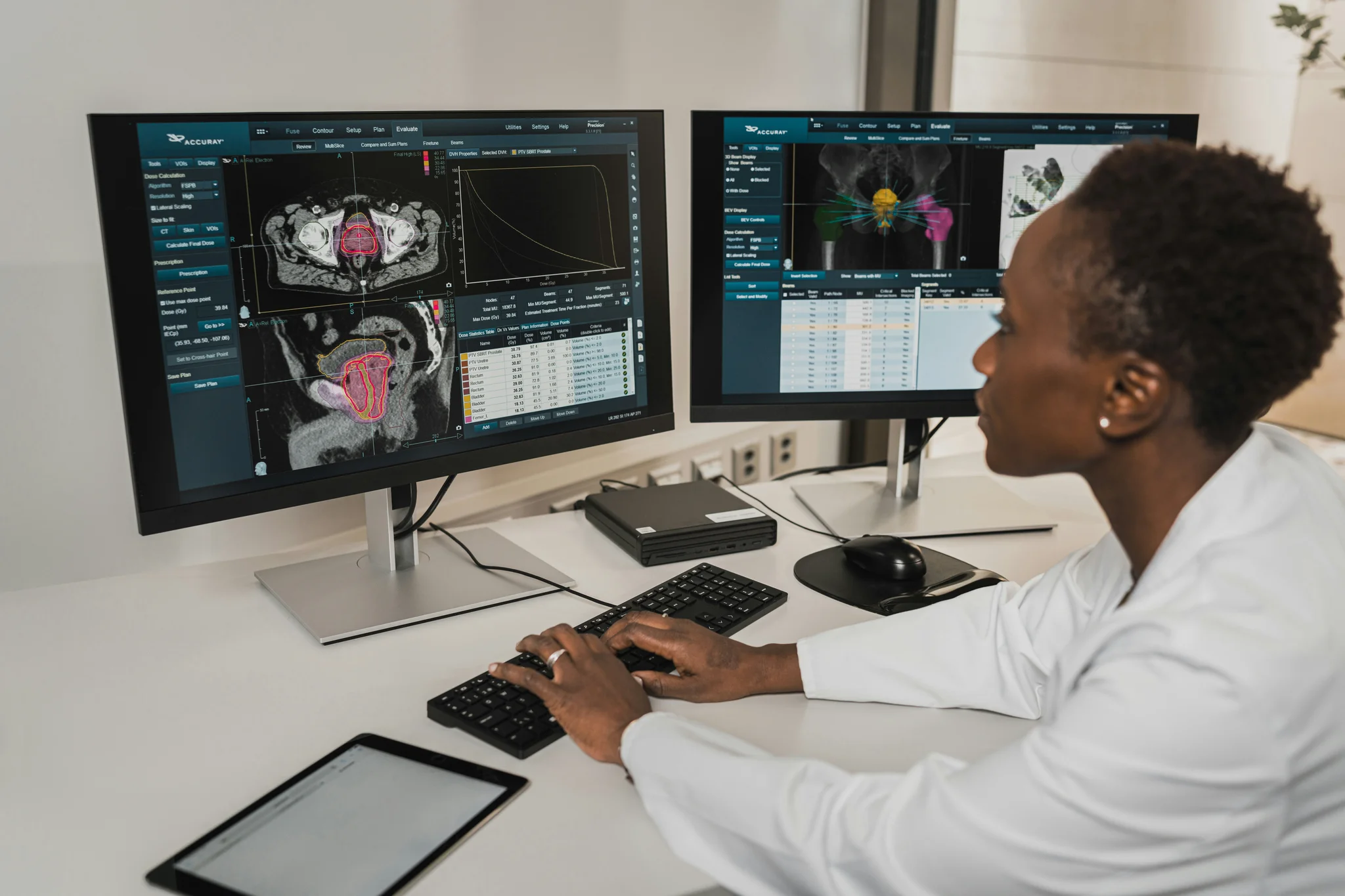
The modern diagnostic machine, whether MRI, CT, or ultrasound, is evolving from image generator to data platform. Each scan contains terabytes of information, but only a fraction reaches the report. Rad AI’s models analyze, summarize, and structure that information for clinical use.
Unlike consumer AI systems, medical algorithms must achieve near-perfect precision. Every model undergoes rigorous medical device testing, including reproducibility checks and human-in-the-loop review. Datasets are cleaned, normalized, and de-identified to meet medical device compliance and HIPAA standards.
From day one, Jeff says,
“We built Rad AI like a regulated product, not a tech demo. Accuracy, validation, and traceability aren’t optional, they’re the foundation.”
For medical device companies, that philosophy is key. As AI software increasingly accompanies hardware, the line between device and algorithm is fading. The winners will be those who embed compliance, validation, and explainability from prototype to deployment.
How AI in Radiology Improves Follow-Up and Reduces Risk
Every radiologist knows the challenge of missed follow-ups. A lesion is flagged, but the patient never returns. Rad AI’s second product, Continuity, automatically detects actionable findings, tracks them across care teams, and reminds providers when follow-up imaging is due.
The impact reaches every corner of healthcare operations:
- Better patient outcomes through earlier detection
- Reduced liability for hospitals and physicians
- New revenue from completed follow-up studies
By combining automation with EHR integration, Rad AI demonstrates how AI in healthcare can solve real problems, not by replacing clinicians, but by amplifying their reach.
Ensuring Medical Device Compliance in AI and Radiology
Scaling radiology AI requires the same rigor applied to physical devices. Each model is documented, validated, and version-controlled through processes equivalent to medical device testing.
This includes:
- Structured validation datasets with clinical oversight
- Continuous model monitoring for drift
- Comprehensive audit logs for regulatory review
- Data encryption and anonymization in line with HIPAA and SOC 2
These frameworks transform AI from experimental code into certified, trustworthy infrastructure. As global regulators, including the FDA and EMA, introduce clearer pathways for AI classification, companies that already operate under medical device compliance standards will be positioned to lead.
Scaling Global Access to Radiology
While burnout dominates headlines in developed markets, access is the crisis elsewhere. Some nations have fewer than ten radiologists for entire populations. AI offers a bridge.
Rad AI is beginning international expansion in English-speaking regions, enabling radiologists to scale their expertise globally. By integrating imaging AI with diagnostic machines and cloud-based platforms, health systems can deliver faster reads and consistent quality wherever patients are.
This is AI in radiology, not as a luxury, but as a necessity, democratizing expertise through safe, validated automation.
The Talent Driving AI in Healthcare
Behind every breakthrough are the teams building it. As medical device companies and health-tech innovators expand their AI pipelines, they face a surge in demand for specialized talent.
Key roles now include:
- AI and ML engineers developing diagnostic algorithms
- Clinical data scientists ensuring model accuracy and interpretability
- Regulatory and quality specialists guiding medical device compliance
- Software engineers integrating AI into diagnostic machines and imaging platforms
The growth of medical device jobs in these areas underscores a larger shift. AI is not removing roles, it’s reshaping them. Collaboration between clinicians, engineers, and compliance professionals is becoming the new standard in healthcare innovation.
Lessons from AI in Radiology
Rad AI’s progress illustrates several universal lessons for AI in healthcare adoption:
- Prove clinical value early. Time savings and measurable ROI build trust faster than abstract potential.
- Prioritize transparency. Clear documentation and explainable outputs reassure clinicians and regulators alike.
- Design around workflow. Radiology AI succeeds when it integrates seamlessly into existing systems.
- Invest in validation. Treat every software release like a medical device submission.
- Build multidisciplinary teams. Engineering and compliance must evolve together.
These principles are shaping how AI spreads beyond imaging into pathology, cardiology, and oncology, fields where structured interpretation and safety are equally vital.
The Future of Diagnostic Intelligence
As generative and multimodal AI mature, diagnostic systems will combine text, imaging, and biomarker data into unified reports. For radiologists, that means more context and less repetition. For medical device companies, it signals the next generation of intelligent platforms, devices that not only capture images but interpret them.
AI’s promise lies not just in efficiency, but in equity: delivering the same standard of care to every patient, in every geography. That’s the vision driving innovators like Jeff Chang and the teams at Rad AI, bridging the gap between what’s possible and what’s practical.
How Barrington James Supports AI and Life-Sciences Growth
At Barrington James, we partner with organizations leading this transformation. From AI in engineering to medical devices, pharmaceutical, and clinical operations, our recruitment specialists connect businesses with the talent required to innovate safely and effectively.
We support both permanent and contract hiring across functions, including:
- AI engineers, developers, and ML specialists building healthcare models.
- Clinical data and informatics experts.
- Regulatory and quality professionals ensure compliance with medical device regulations.
As a global pharmaceutical recruitment agency and leader in medical devices regulatory recruitment, Barrington James helps clients build teams that bridge scientific innovation and commercial execution.
Whether you are expanding your AI engineering capability, strengthening compliance teams, or hiring cross-functional leaders for new AI initiatives, we provide the consultative support and candidate network to help you succeed.